

Key Takeaway: This article provides 10 detailed after-school program curriculum ideas, complete with sample session outlines and operational tips. The most successful programs, like STEM enrichment and test prep bootcamps, boost revenue by diversifying services and meeting specific parent demands for skill development.
Developing a robust after-school program curriculum is essential for attracting and retaining students. A well-structured offering moves beyond simple homework help. It provides tangible value that parents are willing to invest in. This guide offers actionable curriculum ideas designed for tutoring centers looking to scale their operations.
This list provides a practical framework for implementation. You will find concrete examples, learning objectives, and suggested materials. We also include logistical considerations to help you plan effectively. By exploring these after school program curriculum ideas, you can identify opportunities to expand your services and increase enrollment.
1. STEM (Science, Technology, Engineering, Mathematics) Enrichment Programs
A STEM enrichment program is a hands-on, project-based curriculum that develops critical thinking and problem-solving skills. By offering coding, robotics, and engineering challenges, tutoring centers can meet growing parental demand. This creates new revenue streams and complements traditional academic support.
Structured STEM programs are one of the most effective after school program curriculum ideas. They engage students in hands-on learning through activities like building robots or designing simple video games. This approach makes learning enjoyable and builds tangible skills in high-demand fields.
These programs align with the needs of tutoring centers looking to diversify. They attract a different student segment. You can bundle them with traditional tutoring services to increase student retention and weekly session frequency. A 2022 study by the Afterschool Alliance found 73% of parents agree that afterschool programs help children gain STEM skills.
How can you implement a STEM Program in your center?
Implementing a STEM curriculum requires careful planning around curriculum, staffing, and logistics. You should start small by focusing on one or two popular tracks, like coding or robotics, before expanding your offerings.
Curriculum & Materials: Partner with established platforms like LEGO Education, Code.org, or VEX Robotics. These organizations provide structured lesson plans and project guides that reduce your setup time. A beginner robotics class might use LEGO WeDo kits.
Staffing: Hire instructors with a passion for STEM and experience in project-based teaching. A computer science undergraduate or a tech-savvy teacher can often lead these programs effectively. They don't need an engineering degree.
Scheduling & Pricing: Offer STEM classes on less busy days to maximize facility usage. Consider tiered pricing models, such as a basic coding club and an advanced competitive team prep course. This structure provides a clear progression path.
Expert Tip: Host a bi-annual STEM showcase or competition. Inviting parents to see their children's projects in action is a powerful marketing tool that drives word-of-mouth referrals and demonstrates program value.
2. Language Immersion and Conversation Circles
A language immersion circle is a curriculum idea that prioritizes oral proficiency and cultural fluency over traditional rote memorization. By creating an interactive environment, tutoring centers can build students' conversational confidence. They can also cater to ESL and foreign language learners.
Language immersion programs create an environment where students actively use their target language. These sessions build practical communication skills through peer discussions and cultural activities. This approach is effective for students who know a language's rules but struggle to speak it confidently.
For tutoring centers, these programs represent a valuable expansion. They complement grammar-focused test prep and attract students seeking practical fluency. This model creates a clear pathway from a grammar class to a conversation circle, increasing student lifetime value.
How do I implement a Language Program in my center?
A successful language immersion program hinges on creating a supportive atmosphere. Students must feel safe to practice and make mistakes. You must group students by proficiency to build confidence and ensure relevance.
Curriculum & Activities: Design sessions around real-life themes like ordering food or discussing hobbies. Use props, role-playing, and multimedia content to make conversations engaging. A Spanish conversation circle could analyze a short film.
Staffing: Prioritize native or fluent speakers who are skilled facilitators. An effective instructor guides the conversation, corrects major errors gently, and encourages participation from quieter students.
Scheduling & Grouping: Group students into small circles (4-8 participants) based on proficiency levels. Offer these sessions during evenings or weekends to attract professionals and adult learners. You can use a language school management system to track attendance and organize scheduling.
Expert Tip: Create a "phrase of the week" challenge. Introduce a useful idiom at the beginning of each session and encourage students to use it. Offer a small prize for the most creative usage to gamify the learning experience.
3. Test Prep and Academic Achievement Programs (SAT, ACT, GMAT, GRE, IB, AP)
A test prep program is a high-demand curriculum idea that improves student scores through targeted content review and practice. These programs offer significant revenue potential. They address a critical, time-sensitive need for students aiming for college or graduate school admissions.
Intensive test preparation for exams like the SAT, ACT, and AP is a core offering for many tutoring centers. These programs focus on maximizing a student's score. The curriculum combines deep content mastery with strategies for time management and question analysis.
Offering test prep is a strategic move to attract motivated, goal-oriented students. These programs often command premium pricing due to their clear, measurable outcomes. You can structure them as multi-week courses, short-term "bootcamps," or one-on-one coaching sessions.
How can I implement a Test Prep Program in my center?
A successful test prep program depends on a proven curriculum, expert instructors, and data-driven progress tracking. The key is to build a system that delivers repeatable, demonstrable results for every student.
Curriculum & Materials: License official practice materials from sources like the College Board (for SAT/AP) or ACT, Inc. Supplement these with high-quality third-party resources. A strong curriculum includes diagnostic tests and targeted lesson plans.
Staffing: Hire instructors who are subject-matter experts and have scored highly on the tests they teach. An effective test prep tutor is also a coach who can motivate students and build their confidence under pressure.
Scheduling & Pricing: Structure your programs in cohorts, such as an 8-week SAT prep course leading up to a specific test date. Bundle packages that include instructional hours and practice tests. You can find more information about ACT prep programs in Baton Rouge.
Expert Tip: Offer a score improvement guarantee (e.g., a 150-point SAT increase or your money back) to build credibility. Use initial diagnostic tests to set realistic score goals and track progress transparently.
4. Music Lessons and Performance Programs
Music lessons and performance programs are a structured, skill-based curriculum that builds discipline, creativity, and confidence. By combining individual instruction with group ensembles and recitals, tutoring centers can create a vibrant community. This fosters long-term student engagement.
Music programs are one of the most enriching after school program curriculum ideas. Students engage in everything from mastering an instrument to understanding music theory. This holistic approach cultivates both technical skill and collaborative artistry, making learning dynamic and rewarding.
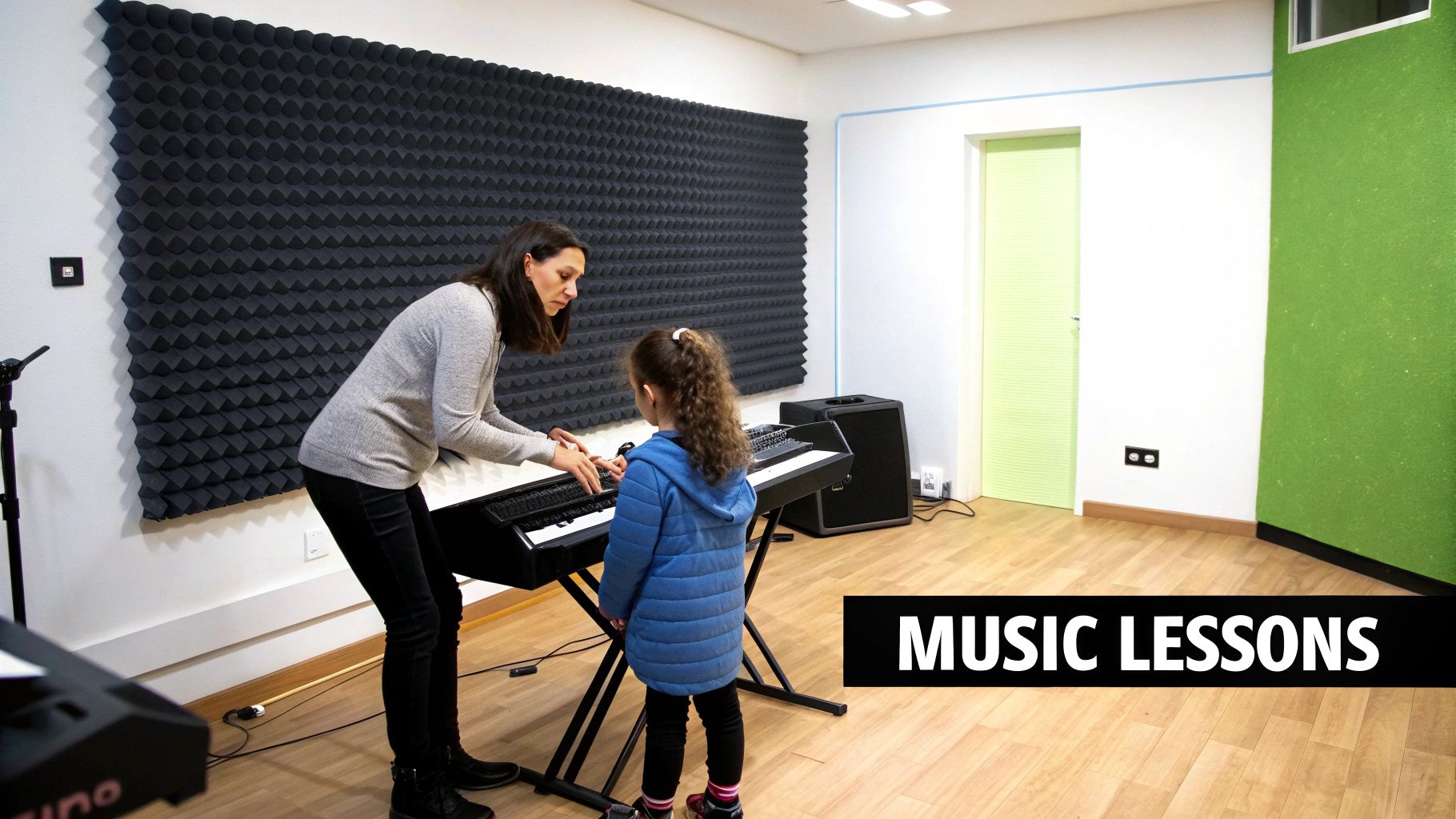
For tutoring centers, offering music lessons diversifies your services beyond core academics. It attracts students with artistic interests and creates a unique community. These programs often have high retention rates, as students commit to long-term skill development.
How can my center implement a Music Program?
A successful music program requires dedicated space, qualified instructors, and a clear progression path for students. You should start with popular instruments like piano and guitar before adding more specialized options.
Curriculum & Materials: Adopt a recognized methodology like the ABRSM or Suzuki method for a structured framework. You will need instruments, sheet music, and metronomes. Using specialized music software for schools can also help manage lesson plans and student progress.
Staffing: Recruit instructors who are proficient musicians and passionate educators. A university music student or a local professional musician can be an excellent fit for your program.
Scheduling & Pricing: Bundle individual lessons with group ensemble participation to encourage collaboration. Offer monthly packages with recurring billing to streamline payments. Use dedicated practice rooms on a rotating schedule to maximize space.
Expert Tip: Host a seasonal student recital or open mic night. These performance events showcase student progress, build a strong sense of community, and provide powerful marketing content for your center.
5. Arts and Creative Media Curriculum (Visual Arts, Drama, Film, Graphic Design)
An arts and creative media program engages students beyond core academics. It fosters creativity, technical skills, and portfolio development. By incorporating visual arts, drama, or digital media, tutoring centers can attract new student demographics and build a vibrant brand.
This curriculum moves beyond simple crafts and into skill-based creative development. Students learn tangible techniques in areas like digital illustration or video editing. These programs cater to students passionate about creative fields and provide an outlet for self-expression.

These programs also help high school students build portfolios for college applications. This positions your center as a crucial partner in their higher education journey. You can justify premium pricing for specialized portfolio prep courses.
How do I implement an Arts and Creative Media Program?
A successful arts program requires a blend of creative freedom and structured learning. You should focus on project-based outcomes that allow students to showcase their work and see tangible progress.
Curriculum & Materials: For visual arts, start with foundational courses in drawing and painting. For digital media, invest in a few computers with industry-standard software like Adobe Creative Cloud. Many schools offer educational discounts.
Staffing: Recruit instructors from local art colleges or professional creative communities. A local graphic designer, photographer, or theater student can bring real-world expertise and passion to your classes.
Scheduling & Pricing: Structure classes as multi-week workshops or project-based bootcamps. Consider project-based fees instead of hourly rates for portfolio development services. Understanding foundations can provide valuable insights into securing funding for arts and creative media education.
Expert Tip: Host a bi-annual student art exhibition or film festival. Invite families and the local community to celebrate student work. This creates a powerful sense of community and serves as an excellent marketing event.
6. Executive Function and Learning Skills Coaching
Executive function coaching teaches students how to learn, moving beyond subject-specific tutoring. By focusing on organization, time management, and study strategies, tutoring centers can address the root causes of academic struggles. This creates more resilient and independent learners.
Many students struggle because they lack the underlying skills to manage their work. Executive function coaching directly addresses these gaps. This curriculum idea for after school programs teaches metacognitive skills like planning and organization. These skills are crucial for academic success.
Offering this service establishes you as a comprehensive academic partner. It creates a new, premium service line that complements traditional tutoring. It is a powerful differentiator in a crowded market.
How can I implement an Executive Function Program?
A successful program requires a structured approach that combines assessment, a modular curriculum, and consistent progress tracking. The goal is to build sustainable habits for students, not just provide temporary fixes.
Curriculum & Materials: Start with a diagnostic assessment to identify specific executive function gaps. Then, create a modular curriculum covering key areas like organization, time management, and study skills.
Staffing: Hire learning coaches or tutors with a background in special education or educational psychology. They must be patient and adept at building rapport to help students develop new habits.
Scheduling & Pricing: Position this as a one-on-one premium coaching service. Offer it in packages of 8-12 sessions to ensure commitment. Schedule these sessions alongside traditional tutoring to encourage cross-referrals.
Expert Tip: Host workshops for parents on how to reinforce executive function skills at home. This creates a supportive ecosystem for the student and strengthens your center’s relationship with the family.
7. What is a Homework Help Program?
A homework help program provides a structured, supervised environment for students to complete their daily assignments. This model appeals directly to working parents seeking a safe and productive after-school solution. It creates a consistent, high-volume revenue stream for tutoring centers.
A homework club program is one of the most practical after school program curriculum ideas. The program provides a dedicated space where students work on their schoolwork. Tutors are available to offer immediate assistance and clarify instructions.
This service is a powerful entry point for new families. It functions as both an academic support system and a childcare solution. Once students are in your ecosystem, you can identify learning gaps and upsell them into more specialized tutoring programs.
How can my center implement a Homework Club?
A successful homework club relies on organization and a well-defined process for academic escalation. The goal is to create an environment that is more productive than home but less intensive than a formal tutoring session.
Structure & Scheduling: Designate specific time slots for the homework club, such as Monday through Thursday from 3:30 PM to 5:30 PM. Use scheduling software to manage attendees and maintain a proper student-to-tutor ratio (e.g., 6:1).
Staffing: Tutors in a homework club act as facilitators. They should be well-versed in multiple subjects at the grade levels you serve. Their primary role is to keep students on task and answer questions.
Parent Communication & Upselling: Implement a system for tracking student progress. Note which subjects consistently require help. Use this data to provide parents with weekly updates and recommend one-on-one tutoring when needed.
Expert Tip: Bundle your services to create value. Offer a discounted package that includes unlimited homework club access plus one or two weekly private tutoring sessions. This creates a predictable revenue model.
8. Enrichment Camps and Seasonal Intensive Programs
An enrichment camp is an intensive, short-term curriculum offered during school breaks like summer, winter, or spring. These programs attract new students by combining academic skill-building with engaging activities. They maximize facility usage during off-peak times.
These camps run for one to four weeks with full-day or half-day schedules. They are among the most lucrative after school program curriculum ideas. They allow centers to create major revenue spikes during school holidays.
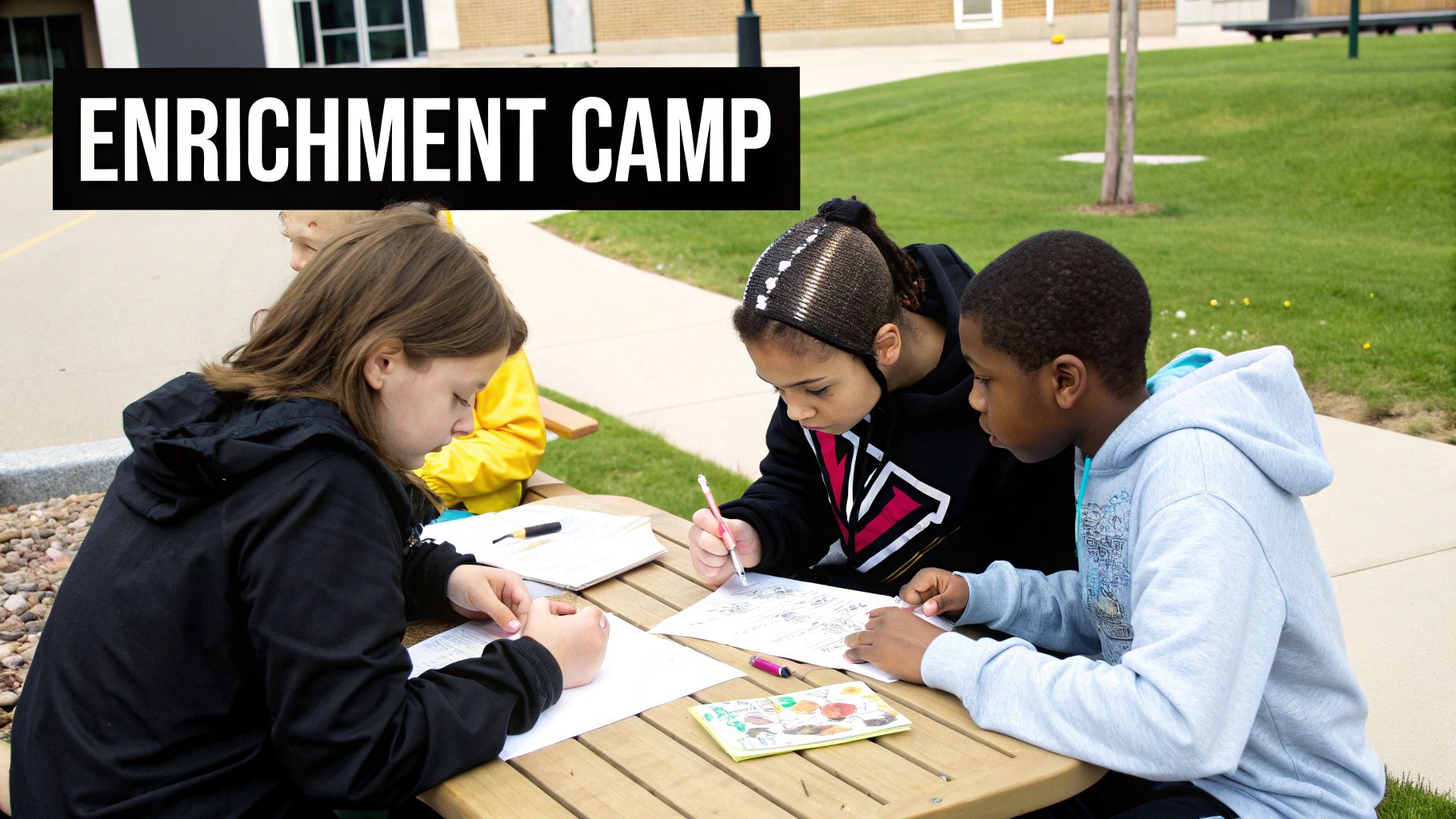
These programs blend academics with fun, thematic enrichment. A summer camp might focus on a "Mission to Mars" theme that integrates STEM and creative writing. This model allows you to tap into a market of parents looking for structured holiday activities.
How do I implement Enrichment Camps in my center?
Successful camp implementation hinges on early planning, targeted marketing, and seamless logistics. The goal is to create a well-organized, high-value experience that parents will recommend and students will enjoy.
Curriculum & Themes: Develop distinct, engaging themes that stand out. Instead of a generic "Art Camp," offer a "Digital Comic Book Creation" camp. This thematic approach makes marketing more effective.
Staffing & Scheduling: Plan staffing needs based on projected enrollment. You may need to hire temporary instructors with specific skills. Schedule camps to fill your center during typically slow periods.
Marketing & Enrollment: Begin promoting summer camps as early as February or March to capture early-bird registrations. Offer discounts for multi-week sign-ups or sibling enrollments to secure guaranteed attendance.
Expert Tip: Secure baseline enrollment by offering an exclusive "early bird" discount to your current students before opening registration to the public. This guarantees initial revenue and helps you forecast staffing needs.
9. Specialized Tutoring for Learning Differences (Dyslexia, Dyscalculia, ADHD)
Specialized tutoring uses evidence-based, multisensory interventions for students with learning differences. Offering programs like Orton-Gillingham for dyslexia or executive function coaching for ADHD positions your center as an essential partner for families. It provides targeted, effective support.
Standard curricula often fall short for students with diagnosed learning differences. This curriculum idea focuses on adapting teaching methods to match specific learning profiles. These programs use structured, research-backed interventions to build foundational skills.
By providing this specialized service, tutoring centers can serve a critical need in their community. This approach establishes deep trust with parents and generates higher-value service packages. It also creates strong referral partnerships with educational psychologists and schools.
How do you implement a Specialized Tutoring Program?
Launching a program for learning differences requires a commitment to specialized training, diagnostic assessment, and structured communication. Your role is not just a tutor; you are an interventionist.
Curriculum & Staffing: Invest in training and certification for your staff. Hire instructors certified in structured literacy programs like Orton-Gillingham or Wilson. For ADHD support, seek individuals trained in executive function coaching.
Assessment & Packages: Begin with diagnostic assessments to create an individualized learning plan. This data-driven approach justifies the program's value. Offer comprehensive packages with twice-weekly intervention sessions and parent coaching.
Tools & Environment: Create a learning environment that supports diverse needs. You can incorporate tools like sensory toys for students with ADHD to enhance focus. Use software to track progress on metrics like reading fluency.
Expert Tip: Host free parent information sessions on topics like "Understanding Dyslexia" or "Executive Function 101." These events build your reputation as a community expert and generate qualified leads.
10. Debate, Public Speaking, Model United Nations (MUN) and College Admissions Counseling
An integrated debate and college admissions program builds critical communication skills and provides a clear pathway to higher education. By combining public speaking, MUN, and strategic college counseling, centers can attract ambitious high school students. This creates a high-value, long-term service.
Combining argumentation skills with college application support is a powerful curriculum idea. These programs teach students to research, structure compelling arguments, and speak confidently. They then apply these skills to their own college applications.
This integrated model creates a holistic support system that is highly attractive to parents. It establishes your center as a premium, results-driven institution. It prepares students not just for tests, but for success in college and beyond.
How can my center implement a Debate and College Counseling Program?
A successful program requires a dual focus on competitive coaching and personalized admissions guidance. You can start with one component, like essay editing, and build out the full program over time.
Curriculum & Structure: For debate, use resources from the National Speech & Debate Association. Create clear tiers to accommodate different skill levels. For college counseling, develop a milestone-based timeline for juniors and seniors.
Staffing: Recruit coaches with competitive debate or MUN backgrounds to build credibility. For admissions counseling, hire experienced independent college counselors or train existing staff with strong writing skills.
Scheduling & Pricing: Offer debate club meetings twice a week and schedule one-on-one college counseling sessions separately. Price these as premium, bundled packages. For example, offer an "Ivy League Prep" package for a full academic year.
Expert Tip: Host a mock debate tournament or a college application essay workshop. Invite both current and prospective families. This demonstrates tangible skills and provides an entry point to market your counseling services.
After-School Curriculum Comparison Table
Program Idea | Primary Goal | Target Audience | Key Advantage |
|---|---|---|---|
STEM Enrichment | Develop problem-solving skills | K-12 students interested in tech | High market demand & premium pricing. |
Language Immersion | Improve conversational fluency | ESL learners, foreign language students | High engagement and recurring attendance. |
Test Prep | Maximize standardized test scores | High school & graduate students | Clear ROI and predictable seasonality. |
Music Lessons | Build instrumental proficiency | Students with artistic interests | High retention and community building. |
Creative Arts | Foster creativity & build portfolios | Artistically inclined students | Differentiates center from competitors. |
Executive Function | Teach 'how to learn' skills | Students with organizational challenges | High-value, recurring revenue model. |
Homework Club | Provide academic supervision | K-8 students of working parents | High volume potential, acts as a lead generator. |
Seasonal Camps | Generate revenue during breaks | K-8 students needing holiday activities | Major revenue spikes in off-peak times. |
Specialized Tutoring | Remediate learning differences | Students with dyslexia, ADHD, etc. | Premium service with strong referral networks. |
Debate & College Prep | Build communication & application skills | Ambitious high school students | Builds prestige and high-value packages. |
Frequently Asked Questions (FAQ)
What defines a good after school program curriculum?
A good after school program curriculum is engaging, well-structured, and meets specific learning objectives. It should offer hands-on activities, cater to different learning styles, and provide measurable outcomes that demonstrate student progress and skill development.
How do I choose the right curriculum for my center?
You can choose the right curriculum by first analyzing your target market and surveying current families to gauge their interest. Next, assess your staff's expertise to see which programs you can support internally. Finally, research local competition to find a unique market niche.
How can I make my after school program more engaging?
To make your program more engaging, you should incorporate project-based learning, use interactive technology, and gamify activities with friendly competitions. Also, gather regular student feedback to tailor activities to their interests and ensure content remains relevant and fun.
What are some low-cost curriculum ideas for a new program?
Low-cost curriculum ideas include a homework help club, which uses existing school materials, or a public speaking and debate club, which requires minimal supplies. You could also start a book club or a creative writing workshop that focuses on skill-building over expensive materials.
How often should I update my after school curriculum?
You should review and refresh your curriculum at least once a year. This annual review ensures your programs align with current educational trends, incorporate feedback from students and parents, and remain competitive. For test prep programs, updates must align with any changes to the exams.
Can I mix different curriculum ideas in one program?
Yes, you can create a hybrid program by blending different curriculum elements. For example, a "STEAM" program combines STEM with Arts. A summer camp could have a daily schedule that includes one hour of academic tutoring, one hour of creative arts, and one hour of outdoor activity.
How do I measure the success of my curriculum?
You can measure curriculum success by tracking key metrics. These include student enrollment and retention rates, academic progress through pre- and post-assessments, and parent satisfaction scores from surveys. Positive testimonials and strong word-of-mouth referrals are also excellent indicators.
What is the most profitable type of after school program?
Specialized programs like intensive test prep (SAT/ACT), coding bootcamps, and tutoring for students with learning differences are often the most profitable. These services command premium pricing because they address urgent needs and provide clear, high-value outcomes for families.
Managing diverse programs requires robust organization. Tutorbase automates scheduling, billing, and parent communication, freeing you to focus on delivering high-quality education. To streamline your operations and grow your center, sign up at tutorbase.com/register.


